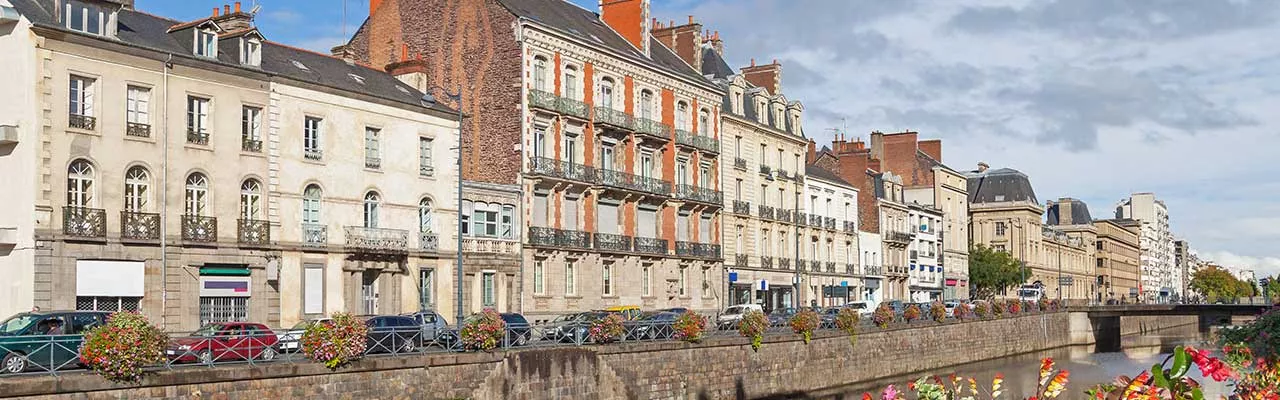
Hotels in Rennes
Your stay at our Rennes hotels-restaurants in Rennes makes it easy for you to enjoy a warm atmosphere with your Campanile hotel booking!
Book now in our Campanile hotels restaurants





Places of interest around Rennes hotels
Find the not to be missed sights of Rennes
Attraction
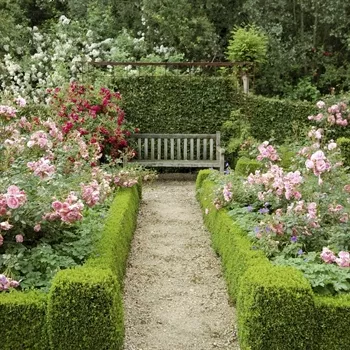
Jardin Botanique du Thabor
Sometimes it's not necessary to escape the city to find nature. Rennes is a perfect example of this, as it has a real green lung at its center. The Parc du Thabor, less than a 10-minute drive from your hotel Campanile Rennes Centre Gare, in fact offers walkers a breath of air, a quite break amid urban life. For the walker who enters this 10 hectare space for the first time, the spectacle is complete. The brilliant green lawns are splashed with flowers and the bubbling of the waterfall can be heard against the walls of the natural cave and in the vast terrain called l’Enfer (small outdoor theatre that is such a misnomer) that give you snippets of the springtime show… The singing of many birds mixes with the laughter of children. Nothing could be more normal, since given its size, the park is the ideal playground for an afternoon with family. Most of the lawn is freely accessible, for various kinds of entertainment during the day. In the shade or in the sun, whether quite or busy, the Parc du Thabor is a polymorphous garden that instills in the explorer a strong desire to return there. No surprise if we tell you that it hosts more than 1.5 million strollers every year.
Attraction
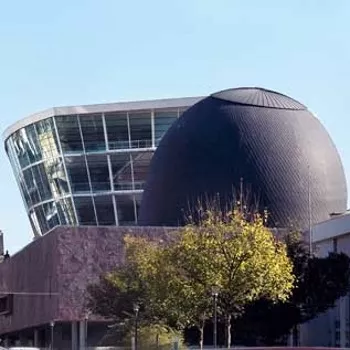
Les Champs Libres - Museum of Brittany
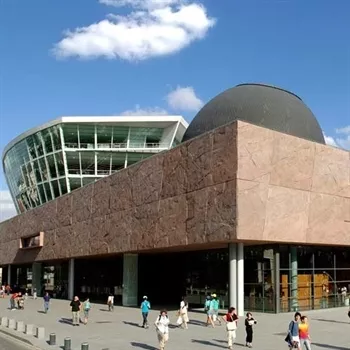
From your hotel Campanile Rennes Centre Gare, you are less than a five-minute walk from the Champs Libres. The building, which was designed by renowned architect from Rennes, Christian de Portzamparc, houses the library, the Museum of Brittany, the Espace des Sciences and exhibition centers. At the Museum of Brittany, discover the history of the region through the collection of 3,000 objects showing off its heritage and its identity. At the Espace des Sciences, you can see one of the many temporary exhibitions or travel through space at the planetarium. In thisvenue for discovery, each session is unique and organized in real time, with the speaker adapting to current events and to the audience. For example, you can head to the sun, revolve around the moon or discover Jupiter. With a 14-meter wide screen, you’ll be projected into the solar system, in the middle of the planets, stars and galaxies. Every Thursday at 5:30 p.m., the session is free for visitors under the age of 26. As for temporary exhibitions, Champs Libres has commented tours for families and tours designed for children (from 3 years of age). It’s a chance to grow as a family!

Museum
Museum of Fine Arts of Rennes
Easily accessible from your hotel Campanile Rennes Centre Gare, the Museum of Fine Arts is one of the five must-see cultural venues in Rennes, along with Champs Libres, the Ecomusée du Pays de Rennes, the Frac and the contemporary art center La Criée. Open, active and alive, the museum starts a conversation between the history of art and art today. Thus, Egyptian, Greek and Celtic antiquities and ancient paintings resonate with the contemporary art collection, represented in particular by artists from Brittany, such as Geneviève Asse, Raymond Hains and Jacques Villeglé. Resulting in large part from Christophe-Paul de Robien’s collection of curiosities, the collection of Italian drawings, which includes drawings by Leonardo da Vinci, Botticelli and Donatello, is a must-see. Also admire the masterpieces of European painters such as Perseus freeing Andromeda by Véronèse, the Tiger Hunt by Rubens or the huge Descent from the Cross by Le Brun. Various activities are designed for families, such as workshops and events. One hour each, they consist of discovering the work of artists in exhibition rooms, then going in-depth into the concepts of a theme or taking on a work with a set of pencils.

TRAVEL GUIDE
Visit Rennes